

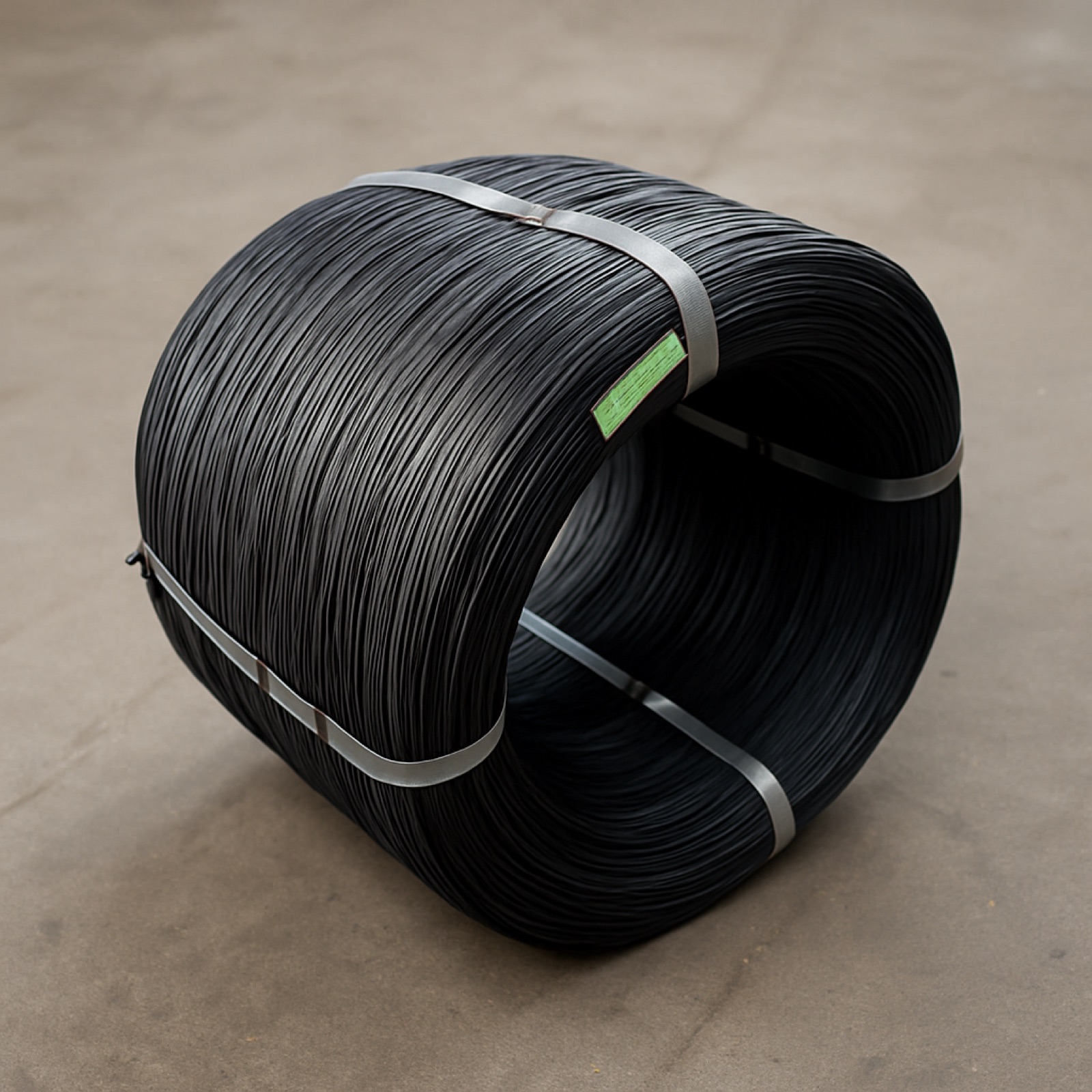
Steel Wire for the Pulp & Baling Industry
Zhongbo makes high-tensile galvanized, black-annealed and bright unitizing wire for automatic and manual balers across the pulp, paper, cotton and recycling industries.
Baling wire has to take a hard, repeated pull without snapping and feed smoothly through automatic tie machines. We control tensile strength and surface finish tightly so every spool ties cleanly.
A single wire break in an automatic baler stops the line and can mean re-tying a half-formed bale by hand, so consistency matters more than headline strength. We draw from quality rod and inspect the surface along the coil so the wire holds its rated strength from the first tie to the last.
Challenges in pulp & baling
Balers run fast and often unattended, so the wire has to be predictable. The problems that cost baling lines time and material:
- Wire snapping on dense bales because tensile strength varies along the coil — one weak spot stops an automatic line.
- Wire jamming or mis-feeding in the tie head because of surface defects or inconsistent diameter.
- Corrosion on stored or exported bales when a bright or annealed wire is used where a galvanized finish was needed.
- A grade that suits one baler but not another, so mixed operations carry several wire types.
- Coil or spool sizes that do not fit the tie machine, causing frequent reloads.
Baling and unitizing wire types
Whatever your baler and bale density, we can match the grade and finish, from soft annealed tie wire for hand baling to high-tensile wire for automatic high-density balers.
Finish is the second choice: galvanized for corrosion resistance on stored or exported bales, black-annealed for maximum flexibility and hand tying, or bright for clean pulp unitizing. We supply all three so you can standardize on one mill.
- High-tensile galvanized baling wire
- Black-annealed baling and tying wire
- Bright galvanized unitizing wire for pulp bales
- Cut-and-looped bale ties on request
- Coil or spool packing to suit your machine
Consistent, break-free baling
Uneven tensile strength or surface defects are what cause wire to snap in the baler. We draw from quality rod, control heat treatment and inspect the surface so the wire holds its rated strength along the whole coil.
Galvanized and annealed finishes are both available depending on whether corrosion resistance or maximum flexibility matters most for your bales. For automatic balers, we also match coil weight and cast so the wire feeds without kinking or bird-nesting in the tie head.
Matching wire to your baler
Automatic, semi-automatic and manual balers each place different demands on the wire, and the right choice comes down to the machine as much as the bale. Automatic high-density balers need high-tensile wire with a tightly controlled cast, so it feeds straight and twists cleanly in the tie head without jamming or bird-nesting. Manual and recycling balers, by contrast, need a softer, more forgiving wire that a worker can pull and tie quickly by hand.
Tell us the baler make and model, the bale size and density, and the diameter and coil or spool format you run, and we will match the grade, finish and packing so the wire loads and ties without adjustment. For exported or long-stored bales we will recommend a galvanized finish for corrosion resistance; for indoor recycling lines a black-annealed finish is usually the more economical and flexible choice. Where you run more than one baler, we can standardize the wire across them or supply a different grade for each.
Standards & compliance
Baling and unitizing wire is usually made to a customer specification rather than a single public standard, because the right tensile and diameter depend on the baler and bale. Zhongbo works to your tensile range, diameter and finish, and can supply a mill test certificate covering tensile strength and diameter per batch. Send the baler model, bale density and current wire spec and we will match it.
Why pulp & baling buyers choose Zhongbo
Baling customers stay with us because the wire simply ties, run after run. What sets it apart:
- Tensile strength controlled along the whole coil, so it does not snap mid-bale or stop an automatic line.
- Galvanized, black-annealed and bright finishes from one mill — corrosion resistance or maximum flexibility, your call.
- Coil and spool packing sized to your specific tie machine to cut reloads.
- Drawn from quality rod with surface inspection to remove the defects that become break points.
- High-tensile grades matched to bale density on request, verified per batch.
Specifications
| Diameter range | 2.0 – 4.0 mm typical (verify for your baler) |
| Finish | Hot-dip galvanized, black annealed, or bright |
| Tensile strength | High-tensile grades to order (verify) |
| Packing | Coils or spools, sized to your tie machine |
| Standards | To customer specification |
Frequently Asked Questions
Galvanized or black-annealed baling wire?
Galvanized wire resists corrosion for stored or exported bales; black-annealed wire is softer and very flexible for hand tying. We supply both.
Can you match my automatic baler?
Yes — send the machine model, wire diameter and coil/spool size and we will supply wire that feeds and ties reliably.
What tensile strength can you provide?
We produce high-tensile baling wire to order. Share your bale density and machine and we will confirm the grade.
Why does baling wire snap in the machine?
Almost always because tensile strength is uneven along the coil or a surface defect creates a weak point. We control heat treatment and inspect the surface so the wire holds its rated strength end to end.
Do you supply wire for pulp unitizing?
Yes — bright galvanized unitizing wire for pulp bales, sized and packed to suit your tie machine.