

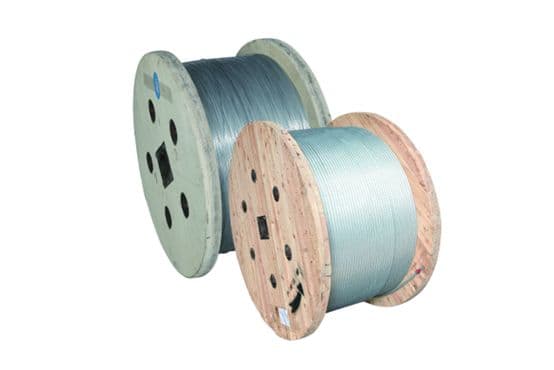
Galvanized Steel Wire for Optical Fiber Cable Support
Optical fiber cables rely on steel wire for support and tensile strength rather than heavy armour — as a messenger wire, central strength member or part of aerial support systems. Consistency and surface smoothness matter most, so the delicate fiber is never stressed.
Zhongbo supplies smaller-diameter galvanized steel wire with tight tensile control and a clean, uniform zinc coating for optical fiber support applications.
Optical fiber is delicate and sensitive to strain, so the steel around it is there for support and tensile strength rather than heavy armour. Small changes in diameter or tensile shift how the cable sags and loads over a span, so consistency is everything — and that is exactly what we control tightly.
Challenges in optical fiber support
Fiber support wire is judged on consistency, not bulk, because the fiber cannot take strain. The challenges we solve:
- Diameter or tensile variation that changes sag and load and can over-strain the fiber over long spans.
- Surface roughness that snags or stresses the cable during stranding.
- Corrosion over years of outdoor aerial service when the coating is thin or uneven.
- Matching the wire to messenger, figure-8, central strength member and ADSS/OPGW designs.
- Holding tight tolerances at the small diameters fiber support uses.
Where it is used
Support and strength-member wire keeps aerial and self-supporting fiber cables stable over long spans without overloading the fiber.
Messenger and figure-8 aerial cables, central strength members, ADSS and OPGW support components, and self-supporting drop and access cables all rely on this wire. In each, the steel does a structural job while the fiber does the signal job, so the wire is chosen for tensile strength, straightness and a clean surface rather than for heavy mechanical armour — and small, consistent diameters matter far more than raw size.
- Messenger / figure-8 aerial fiber cables
- Central strength member wire
- ADSS and OPGW support components
- Self-supporting drop and access cables
Why consistency matters
For fiber support, even small variation in diameter or tensile strength changes sag and load. We hold tight tolerances and a smooth surface so the wire performs predictably across long aerial spans, with a uniform zinc coating for outdoor service life.
Support wire for each cable design
Optical cables use steel in several different roles, and each has its own requirement. A figure-8 or messenger cable carries its whole weight on the support wire, so tensile strength and sag control dominate; a central strength member sits at the core and needs a precise diameter and a clean, uniform surface; and ADSS and OPGW designs add their own tension, handling and sometimes electrical demands. The wire has to suit the specific design, not just the cable in general.
We supply small-diameter galvanized wire tuned to each of these roles, holding tight, consistent diameter and tensile so the finished cable sags and loads predictably over long aerial spans without ever over-straining the fiber it carries. A uniform zinc coating gives the outdoor service life these cables need on poles and towers, and mill test certificates for diameter and tensile are available per batch for your incoming inspection.
Tell us the cable design and the span, and we will confirm the wire size and tensile grade and supply samples so you can prove the sag and load on your own design before committing to a production order.
Standards & compliance
Optical fiber support and messenger wire is produced to ASTM A641, EN 10244-2 or your cable specification. Zhongbo controls diameter and tensile tightly and can supply a mill test certificate covering diameter, tensile and zinc-coating weight per batch. Tell us the support design and span and we will confirm the wire size and tensile grade.
Why optical fiber support buyers choose Zhongbo
Fiber cable makers choose us because the wire performs predictably across long spans. What sets it apart:
- Tight, consistent diameter and tensile so sag and load stay within the fiber’s strain limit.
- Smooth, clean surface that strands without snagging or stressing the cable.
- Uniform zinc coating for long outdoor aerial service life.
- Sized for messenger, figure-8, central strength member and ADSS/OPGW support, 0.8–4.0 mm.
- Mill test certificates for diameter and tensile on request.
Typical Specifications
| Wire diameter | 0.8 – 4.0 mm (support / messenger range) |
| Zinc coating | Standard / heavy galvanized (g/m²) |
| Tensile strength | Tightly controlled, consistent |
| Standards | ASTM A641 · EN 10244-2 |
| Surface | Smooth, clean, uniform coating |
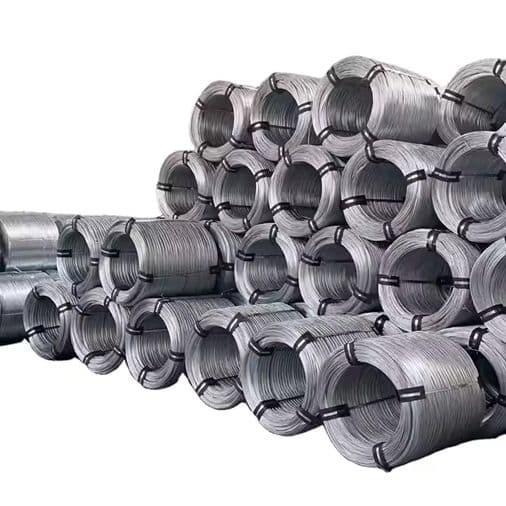
| Packing | Coils / spools, export packing |
Frequently asked questions
Which wire is used as a messenger / strength member for fiber cable?
Smaller-diameter galvanized steel wire (about 0.8–4.0 mm) with tightly controlled tensile strength is used as messenger, figure-8 support and central strength member wire.
Why is tensile consistency important for optical fiber support?
Sag and load over aerial spans depend directly on diameter and tensile consistency. Tight tolerances keep the fiber within safe strain limits across the span.
What tolerance can you hold on fiber support wire?
We hold tight, consistent diameter and tensile at the small sizes fiber support uses; send your tolerance and span and we will confirm what we can hold.
Can you supply wire for ADSS and OPGW cables?
Yes — galvanized steel wire for ADSS and OPGW support components and central strength members, in the diameters and tensile grades those designs use.
Why does tensile consistency matter for messenger wire?
Sag and load over an aerial span depend directly on diameter and tensile; tight tolerances keep the fiber within safe strain limits across the whole span.